How the Heathrow cyber-attack exposed third-party vulnerabilities, and what your business can learn from it
Introduction
Last week’s cyber-incident involving Collins Aerospace’s Muse software has sent shockwaves through the aviation industry, and rightly so. For many travellers at Heathrow, Brussels, Berlin and beyond, check-in kiosks were offline, baggage drop systems didn’t operate normally, and flights were delayed or cancelled. As digital dependency grows, the event brings into sharp focus how fragile our infrastructure really is when a key vendor is compromised.
What Happened
Key Impacts
What Isn’t Yet Clear
Lessons & What Businesses Should Do
- 1
Third-Party Risk Management
Map all suppliers’ technology and processes. Understand which vendors are mission-critical. - 2
Resilience and Fallback Plans
Have manual backup options, tested contingency procedures, redundancy in tools or suppliers. - 3
Regular Security Audits and Monitoring
Not only of internal systems but also of vendor technologies, supply chain dependencies, software patching, etc. - 4
Incident Response & Communication
In an outage, the speed and clarity of communication (to customers, stakeholders, regulators) can greatly influence how disruptive things become. - 5
Collaboration with Authorities and Shared Intelligence
Cybersecurity agencies, regulators (e.g. in UK & EU), industry groups, sharing what has happened helps others prevent or better respond.
How Netserve Helps
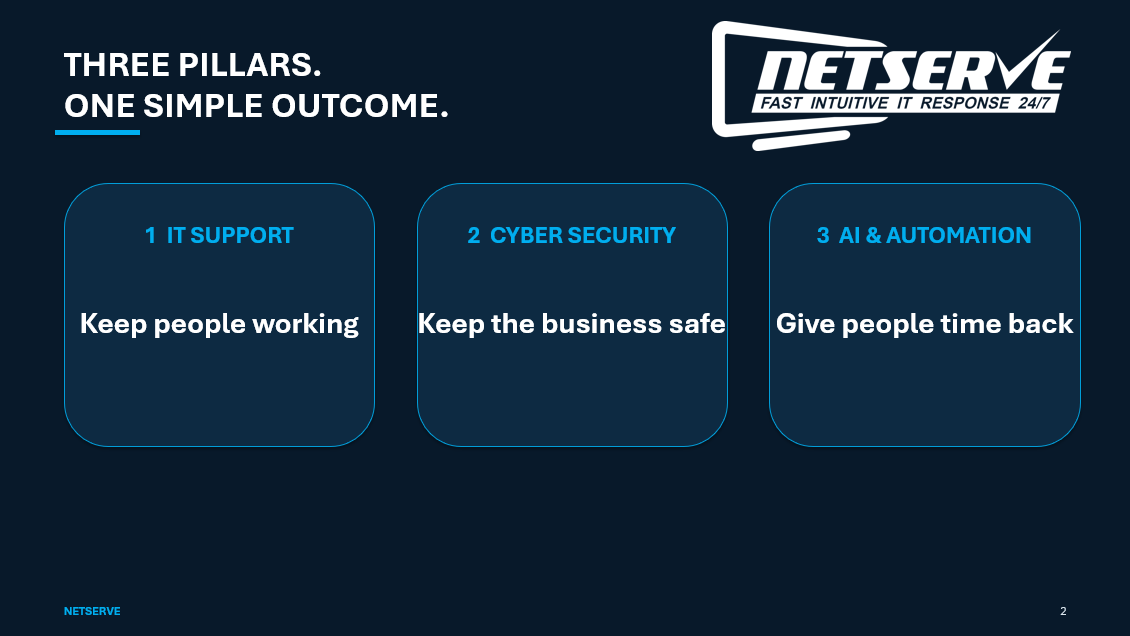
At Netserve, our approach includes:
If you’re assessing your exposure, or want to ensure your systems would survive something like the Muse outage, we can help.
Conclusion
Technology makes operations more efficient but also introduces systemic risk. The recent Heathrow incident is a wake-up call for every organisation that depends on third-party platforms. Building resilience isn’t optional; it’s essential.
The question isn’t if something like this will happen again but when.