A recent live incident shows how modern cyber attacks evade traditional security tools, and why rapid detection and response are now essential.
Cyber attacks don’t always announce themselves with flashing warnings or locked screens. In fact, the most dangerous incidents are often the quietest.
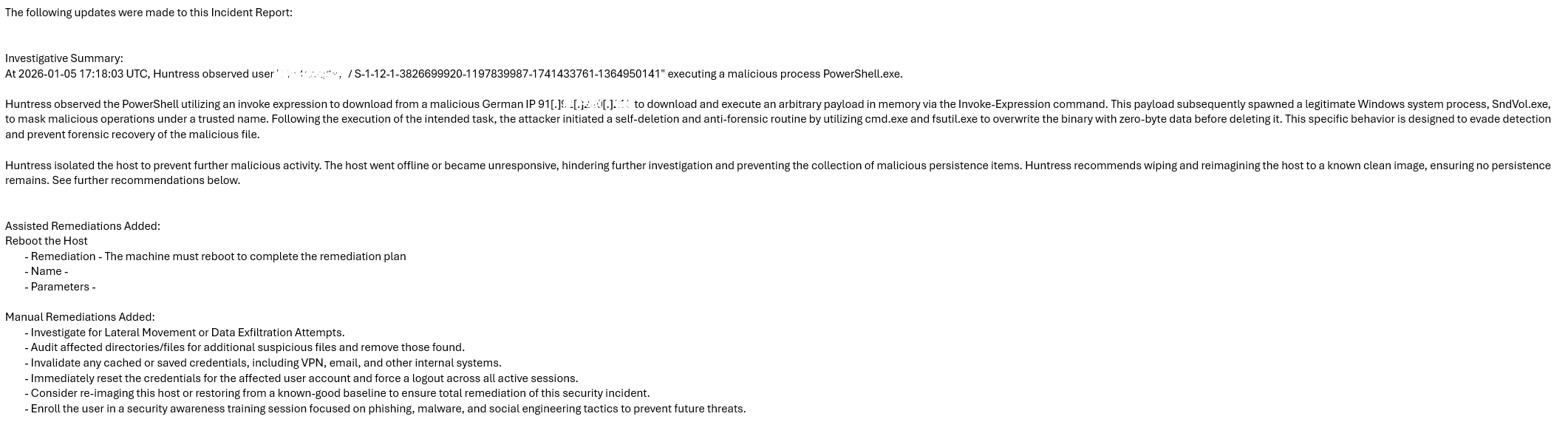
Yesterday evening, our team responded to a live security incident that was detected by our Managed Detection & Response (MDR) partner, Huntress. While the impact was contained quickly, the techniques used by the attacker are a clear example of how modern threats are designed to stay hidden, and why relying on traditional antivirus alone is no longer enough.
What Happened (High-Level Overview)
The incident began in a way that would feel familiar to many organisations.
A user accessed a website they had used before and opened a PDF file. At face value, nothing appeared unusual. However, behind the scenes, a compromised user account executed a malicious PowerShell command.
From there:
This behaviour was deliberate and highly evasive.
Why This Type of Attack Is So Dangerous
This incident wasn’t about brute force or obvious malware. It was engineered to:
Without active monitoring and behavioural detection, this type of attack can easily go unnoticed, sometimes for weeks or months.
The potential consequences of an undetected incident like this include:
By the time symptoms appear, the damage is often already done.
How We Responded
Because the activity was detected early, our response was immediate and decisive:
Speed mattered. Every minute between detection and response reduces the attacker’s opportunity to escalate.
The Key Takeaway
Cyber attacks today are not loud or obvious.
They are:
The difference between a minor security incident and a major data breach often comes down to:
If your organisation is relying purely on traditional antivirus or hoping that “it won’t happen to us” this incident is a reminder that hope is not a security strategy.
Modern security requires visibility, detection, and the ability to respond in real time.