
Our client’s server room had gradually become inefficient as infrastructure expanded over time. Two communications cabinets were in use, with equipment and cabling spread across both. While the setup was functional, it introduced unnecessary complexity, reduced available space, and made ongoing maintenance more difficult.
Before
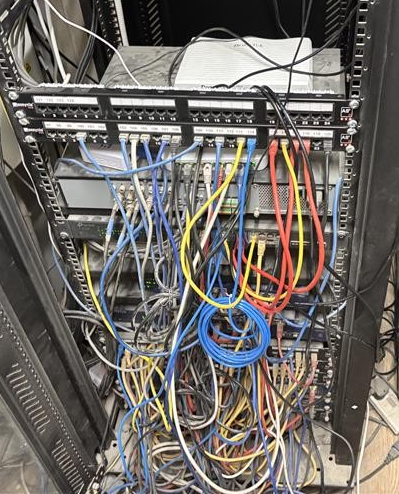
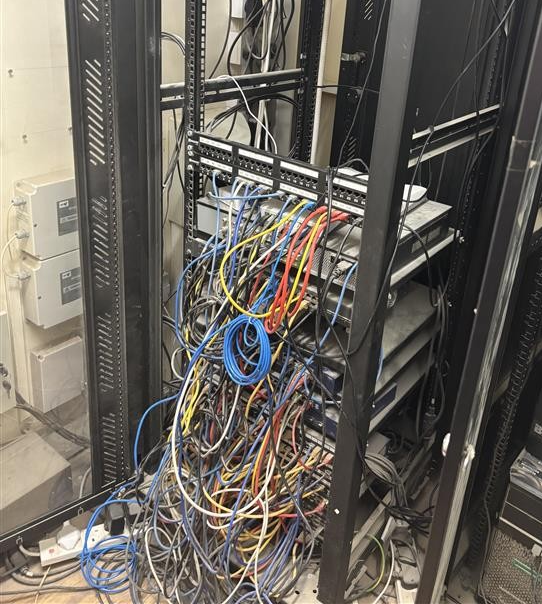
Cabling between switches, patch panels, and servers had accumulated without a consistent structure. Many patch leads were significantly longer than required, resulting in excess slack, loops, and cable congestion across the cabinets. This made it harder to visually trace connections and increased the time required for troubleshooting or equipment changes.
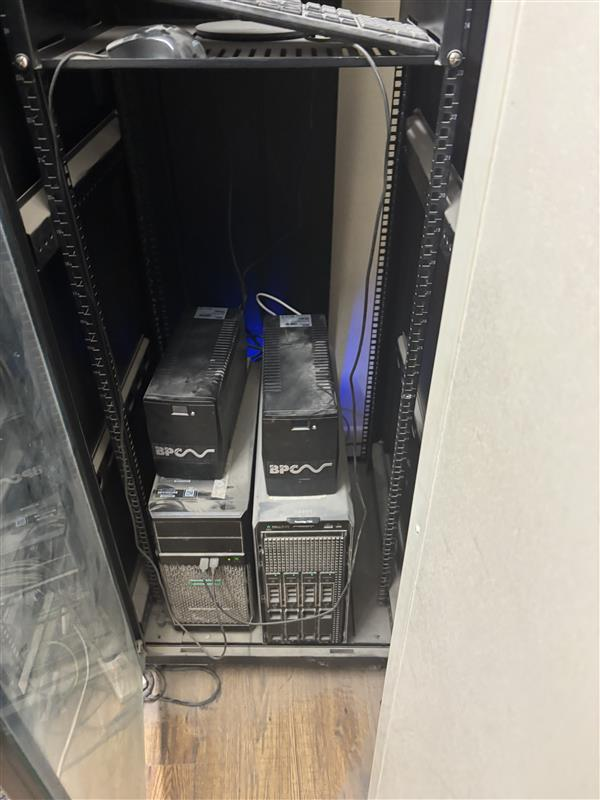
The secondary cabinet housed several servers and UPS units that had historically been installed as the environment grew. Over time, this distribution of equipment created inefficiencies in power usage, airflow, and rack space. In addition, some legacy or redundant hardware remained in the racks despite no longer being required for the live environment.
Dust and debris had also built up on equipment and rack surfaces, which is common in environments where infrastructure has been in place for a number of years without a full physical tidy. While this did not present an immediate issue, maintaining a clean environment helps improve equipment longevity and airflow.
Overall, the environment was operational but lacked the physical organisation and efficiency expected from a well-managed infrastructure setup.
After
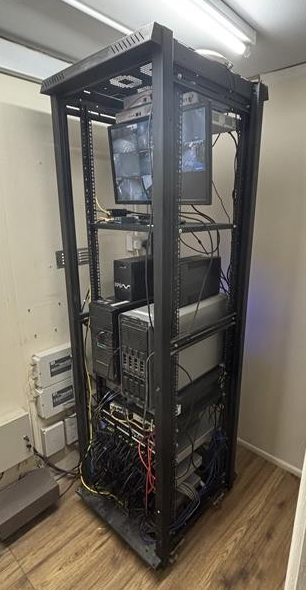
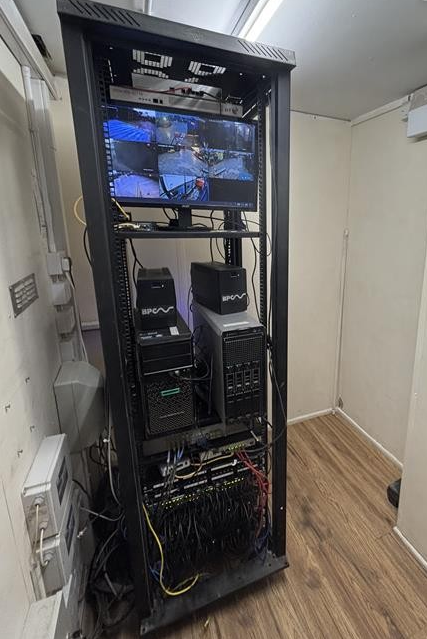
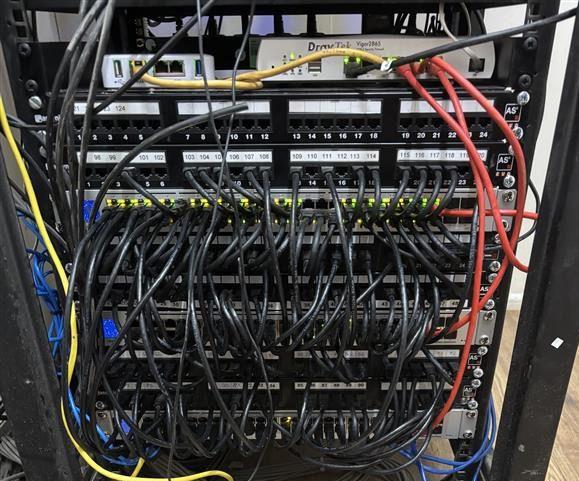
Our objective was to simplify the environment by consolidating the entire infrastructure into a single communications cabinet while improving overall organisation and maintainability.
All active equipment from the secondary cabinet, including servers and UPS units, was carefully relocated into the primary rack. This allowed the second cabinet to be completely decommissioned, reducing the physical footprint of the infrastructure and freeing up space within the room.
The network cabling was fully reworked. Existing patch leads were removed and replaced with correctly sized, shorter patch leads to eliminate unnecessary slack and cable congestion. This significantly improved airflow, visibility, and ease of maintenance. The revised layout also made it much simpler to trace connections between switches, patch panels, and servers.
Redundant and unused equipment was identified and removed from the racks. This helped reduce clutter, improve rack space utilisation, and ensure only active infrastructure remained in the environment.
Finally, all equipment and rack components were cleaned to remove dust and debris, leaving the cabinet in a significantly improved condition.
The final result was a single, organised communications cabinet with clear cabling, efficient use of rack space, and a cleaner environment that will be far easier to maintain going forward.
If your server room or comms cabinet has grown organically over time, a structured tidy and consolidation can dramatically improve reliability and maintainability. Speak to our team to see how we can simplify and optimise your infrastructure.