
One of our Core Values at Netserve is Learning and like all of our values, we wanted it to mean something in practice, not just in principle. SWARM is a good example of that in action.
So, What Is SWARM?
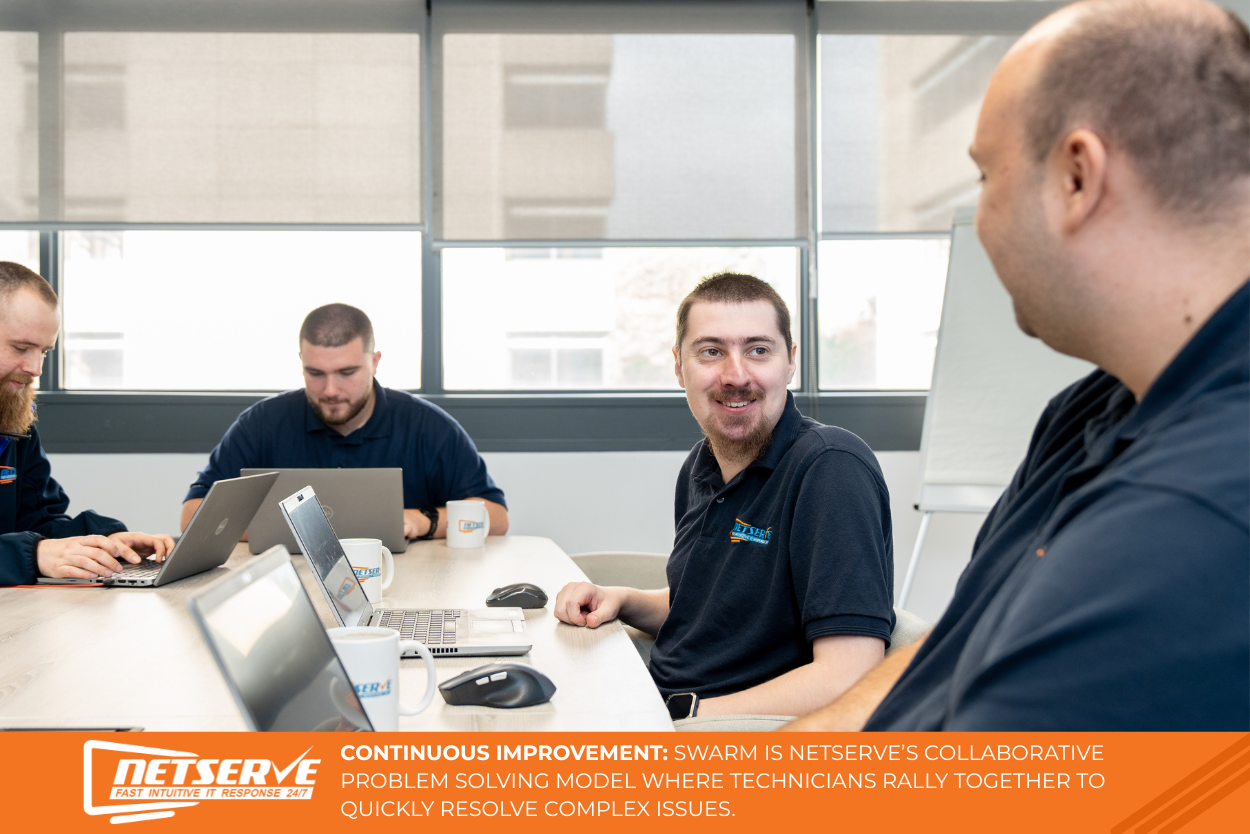
SWARM is our internal problem solving model. When a technician hits a wall on a technical issue (something they can’t resolve on their own) they call a SWARM. That’s the signal for everyone, whether they’re in the office or working from home, to stop what they’re doing and come together around that technician.
The technician walks the group through the issue: what the problem is, what they’ve already tried, and any relevant context. From there, the rest of the team briefly discuss and work towards a solution together. In most cases, someone has encountered the exact same issue before. It’s usually just a case of getting that knowledge into the room.
Why It Works
It’s a simple concept, but it solves a few problems at once.
For the client, it means their issue gets picked up quickly and gets the benefit of the whole team’s experience, rather than sitting with one person who might be going around in circles. That keeps our response times where they need to be and means the solution is well considered rather than rushed.
For the technicians, it’s genuinely one of the better ways to learn. There’s a big difference between reading about an issue and hearing a colleague talk through how they actually fixed it. SWARM creates those moments regularly and naturally, without anyone having to set up a training session or write a knowledge base article.
It also means no one feels stuck alone with a problem. That matters. Technical support can be a high pressure environment, and knowing the team will rally around you when something’s stumped you makes a real difference to how supported people feel day to day.
Learning Built Into How We Work
What we like about SWARM is that it doesn’t require anyone to carve out extra time for learning. It happens as part of solving real problems. Everyone involved walks away knowing something they may not have known before, and that knowledge stays in the team.
It’s a straightforward model, but it reflects something we genuinely believe, that the best solutions usually come from working together, and that a team that shares knowledge consistently is one that keeps getting better.
